

Start with a short pack. Sellers name it a sample, a trial, or simply a small count. It holds a few pieces of one product, enough to check size and the absorbency word printed on it. The full case comes later, after those two details are confirmed. A case bought on a guess fills storage with the wrong waist or the wrong word.
Size is a measurement you can check with a tape, a tag, or the bag you are replacing. Absorbency is a word the maker prints: moderate, maximum, overnight, or whatever that brand uses. A small pack lets you see both on the real product, in the size you ordered, before a case repeats them.

Questions to ask before you buy is the longer list of what to settle first. For this choice, two questions carry the order: which size, and which absorbency word. If either answer is still a guess, the case is early.
A first order small enough to check the fit
Use the small pack on the format you think you are buying. A trial of pull-ups tells you about those pull-ups. It does not tell you how a washable pant will fit or what laundry will add. Washable absorbent underwear and disposable pull-ups is that separate choice. A trial of all-in-one briefs does not show you a cover-and-insert system. Check which setup is already in the house. Reusable covers with disposable inserts is the two-piece version.
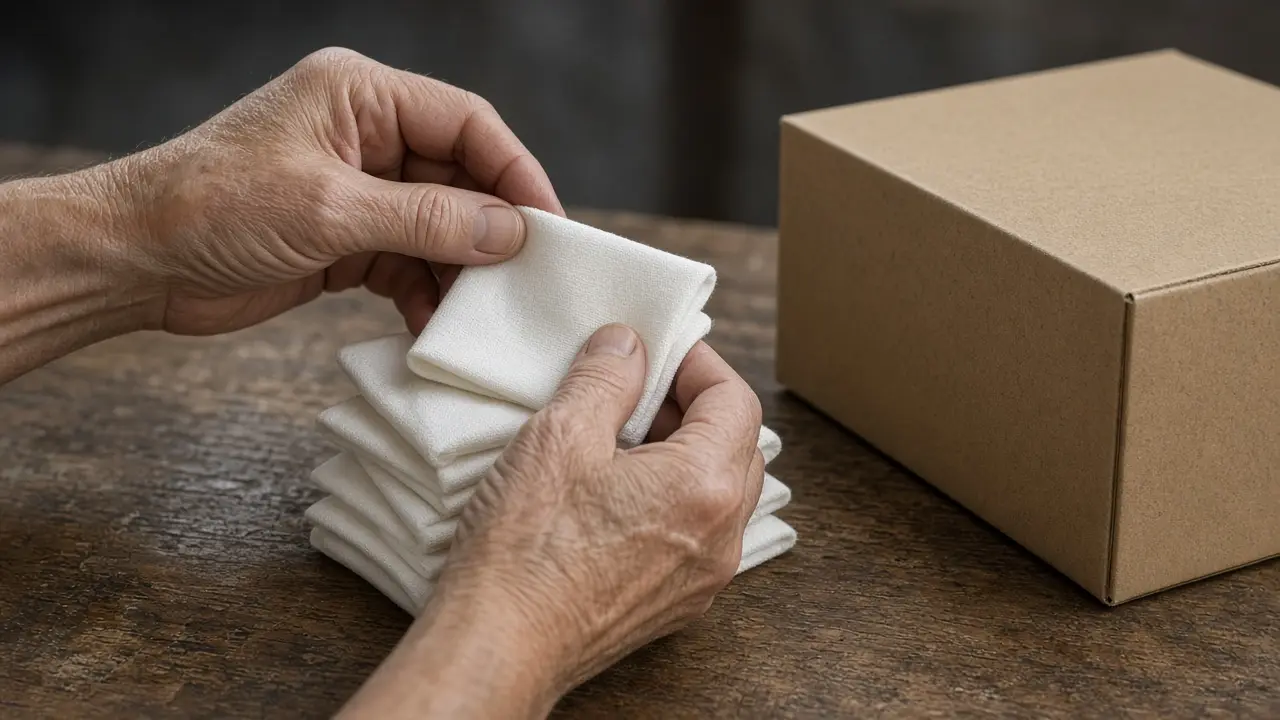
Read the small pack the way you would read a case. Waist range or brief size, absorbency word, count, and any note about tabs or pull-on. If the sample omits the waist range, it is a weak check. Order a pack that prints the same size language you will later see on the case.
One small pack answers a narrow question. It can show that this size is the one to reorder, or that it is not. It can show that this absorbency word is the one you want on the next bag. A monthly quantity comes from how many pieces the person already uses. Count that in the house. The word sample on the box does not include it.
The case you place once those details are known
After the size and the word are confirmed, the case is the ordinary reorder. Match the case to the sample you kept: same size range, same absorbency word, same format. Moving to a neighboring size because the piece price looks lower starts the check over. It is a new order, and the old confirmation no longer covers it.
Divide the case price by the count on that page if you want a price per piece. Do it on the day you order. A case is more money out the door than a sample, because it is more pieces. The piece price is worth looking at only for the product you have already decided to repeat.
How to reorder for a parent is the note for adult children placing that repeat order. Ask for the size and the absorbency word from the pack that worked, or from the bag that is almost empty. A photo of a different brand in the bathroom is not the sample you tested. If the parent has not worn the product yet, send the small pack, and wait to hear the size and the word before a case goes on a subscription.
Write the decision where the next person can see it. Product type, size, absorbency word, and case count. The sample can stay in the note as the pack you checked, with the date you checked it. The case line is what you buy from then on, until a size change or a word change sends you back to a small pack.

1 thought on “Sample Packs and a Full Case”
Comments are closed.